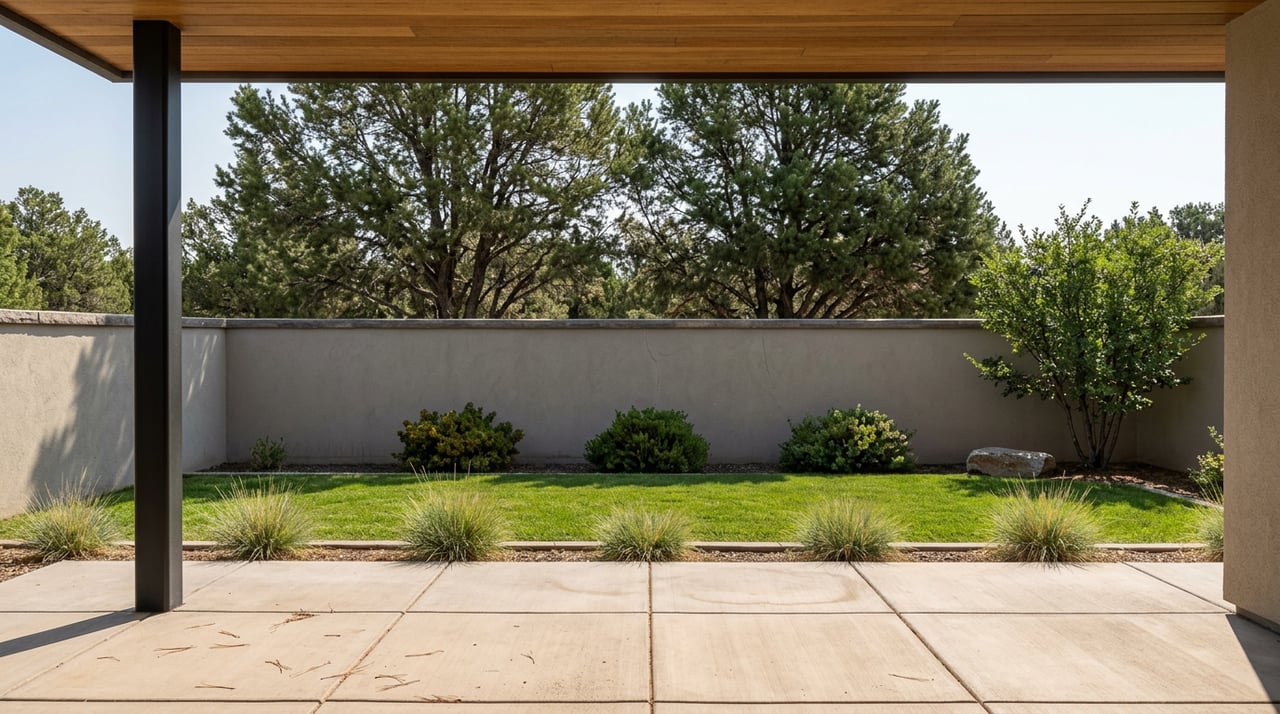
Pull up two listings side by side. One sits in Kiley Ranch in Sparks, priced around $550,000, four bedrooms, a view of the ninth hole. The other sits in ArrowCreek in south Reno, priced around $850,000, similar square footage, also backing a fairway. A buyer comparing these on price per square foot alone will conclude the ArrowCreek home costs more because of finish level or lot premium. That's only part of the story. The bigger difference sits in a column the MLS doesn't show: what happens after closing if you want to actually play the golf course your house backs up to.
In Sparks, you just go play it. In south Reno, you may need to join a private club first, and that membership can cost more per year than most people's property tax bill.
Two "Golf Communities," Two Different Financial Products
The phrase "golf community" gets used the same way across the Reno-Sparks metro, but it describes two structurally different products depending on which side of town you're standing on.
Sparks' golf-anchored neighborhoods, including Kiley Ranch and D'Andrea, sit on public, pay-to-play courses. There's no membership requirement, no initiation fee, and no waitlist tied to home ownership. You buy the house, and the golf course is available to you the same way it's available to anyone driving in off the street.
South Reno's marquee golf communities, ArrowCreek and Montrêux, run on a private-club model. The HOA and the golf club are two separate entities with two separate bills, and buying the home does not automatically get you onto the course.
Here's the shape of that difference:
| Sparks (Kiley Ranch, D'Andrea) | South Reno (ArrowCreek, Montrêux) | |
|---|---|---|
| Course access | Public, pay-per-round | Private, membership required |
| Initiation fee | None | Commonly five figures, sometimes six |
| Annual dues beyond HOA | None for golf access | Often layered on top of HOA assessments |
| HOA structure | Standard neighborhood HOA | HOA plus separate club billing |
Neither structure is better. They're just different financial commitments wearing the same real estate description.
What You're Actually Buying at Kiley Ranch and D'Andrea
Kiley Ranch Golf Club is a 9-hole executive course co-designed by Mark Miller and LPGA Hall of Famer Patty Sheehan, and it operates as a public facility open year round, weather permitting. There's a clubhouse bar, cart rentals, and lessons, but nothing about buying a home nearby obligates you to any of it. You pay for a round the way you'd pay for a round anywhere.
D'Andrea Golf & Country Club carries "country club" in its name, which is exactly the kind of naming convention that trips up out-of-state buyers scanning listings. It's a 9-hole public golf course. Membership, if you want it, is optional, and the course also runs open play and leagues for anyone.
Red Hawk Golf & Resort in Wingfield Springs follows the same pattern: resort-style access, not a private membership gate. For a relocating buyer, this means the "golf community" premium you're paying for in Sparks is mostly proximity and view, not a bundled club obligation.
What You're Actually Buying at ArrowCreek and Montrêux
The Club at ArrowCreek operates two 18-hole courses, the Legend Course designed by Arnold Palmer and the Challenge Course designed by Fuzzy Zoeller and John Harbottle. The club completed a $65 million renovation and expansion and structures membership by invitation or referral across several categories: Golf, Corporate, Sport, Junior Executive, Executive Pathway, and Social.
Here's the part that catches buyers off guard: the ArrowCreek HOA is explicit that the 36 holes of golf running through the community are separate from HOA ownership and require a separate membership through the club. HOA assessments fund the guard-gated entries, the Residents' Center with its three pools and fitness room, and the roughly 30 miles of trails across 525 acres of open space. Club dues are separate from HOA assessments.
Montrêux follows a similar club-membership structure, with an initiation fee and dues set apart from the home purchase itself. Across the region's private clubs, initiation fees commonly start around $25,000 at more accessible clubs and climb well past $100,000 at the most exclusive addresses, with annual dues typically landing in the $8,000 to $25,000-plus range depending on membership category. None of that shows up in the listing price. All of it shows up in your first year of ownership if golf access is part of why you bought there.
If you want the fuller breakdown of how ArrowCreek's HOA and club dues interact, including architectural review rules and rental restrictions, I've written a separate guide to ArrowCreek that walks through it in more depth.
A $200,000 gap between a Sparks listing and a South Reno listing can hide a five-figure annual difference in what happens after you close, and that difference has nothing to do with square footage.
The Other Question to Ask Before You Offer
Golf membership isn't the only line item that lives outside the sticker price in this region's newer master plans. Special assessment districts, known as SIDs, are a financing tool Nevada cities use to fund infrastructure in new development.
A real, recent example: in November 2024, the Reno City Council approved a special assessment district for the Quilici Ranch development near Verdi, a roughly 1,200-home project from Toll Brothers. The district covers about $21.7 million of a $39.6 million water infrastructure cost through a $26 million bond, and, according to This Is Reno, homeowners inside the district will pay an annual assessment of about $1,400 for 30 years to retire it.
To be direct about Sparks specifically: nothing in current research points to an active residential SID attached to Kiley Ranch, D'Andrea, or Wingfield Springs. But the mechanism is active in the broader Reno-Sparks new-construction pipeline, so anywhere you're looking at a newer master-planned community in this region, ask whether a special assessment district exists on the parcel and what year the bond retires. It's a five-minute question during escrow that can save you from a surprise on your first tax bill.
So What Does the Reno-Sparks Price Gap Actually Buy?
As of June 2026, the Northern Nevada Regional MLS put Reno's single-family median sold price at $710,000, up 6.0% from a year earlier, against Sparks at $590,000 the same month. That's a $120,000 gap on the median alone, before you even get to golf-specific neighborhoods where South Reno's private-club addresses commonly start higher still.
Attached homes tell a smaller version of the same story: Reno's condo and townhome median came in at $340,000 in June 2026 against Sparks at $320,000, though with only 97 and 19 units closing respectively, those numbers move more on a handful of transactions than the single-family figures do.
Line those numbers up against the golf-community structure and the gap starts to make more sense. Part of what a South Reno golf-community price buys is the private course itself, the guard gate, and the clubhouse infrastructure baked into HOA and club billing. Part of what a Sparks golf-community price buys is a home near a course you can walk onto without joining anything. Neither is the better financial decision in the abstract. It depends on whether you actually want to golf every week or just want to look at the fairway from your patio.
A Few Questions Worth Asking Directly
Do I have to join a country club to live in ArrowCreek? No. The HOA and the golf club are separate. You can own a home in ArrowCreek without ever joining The Club at ArrowCreek, but golf access requires that separate membership.
Is Kiley Ranch Golf Club open to the public? Yes. It's a public 9-hole course, and living in the neighborhood doesn't require any membership to play it.
Are HOA dues and club dues the same bill? No, and this is the single most common point of confusion. HOA assessments fund the neighborhood. Club dues are billed independently.
If you're weighing a golf-adjacent home in Sparks against a private-club address in south Reno, the right comparison isn't the listing price. It's the all-in number once HOA, club dues, and any assessment obligations are on the table. That's exactly the kind of side-by-side math worth running before you write an offer, and it's the conversation I have with almost every relocating or move-up buyer looking at golf-course property in this market.
If you'd like help running those numbers for a specific neighborhood or listing, reach out to Patricia DuHamel and let's connect.
This article is general information, not legal, tax or financial advice. Consult a qualified professional about your situation.